







 Incredible Marketing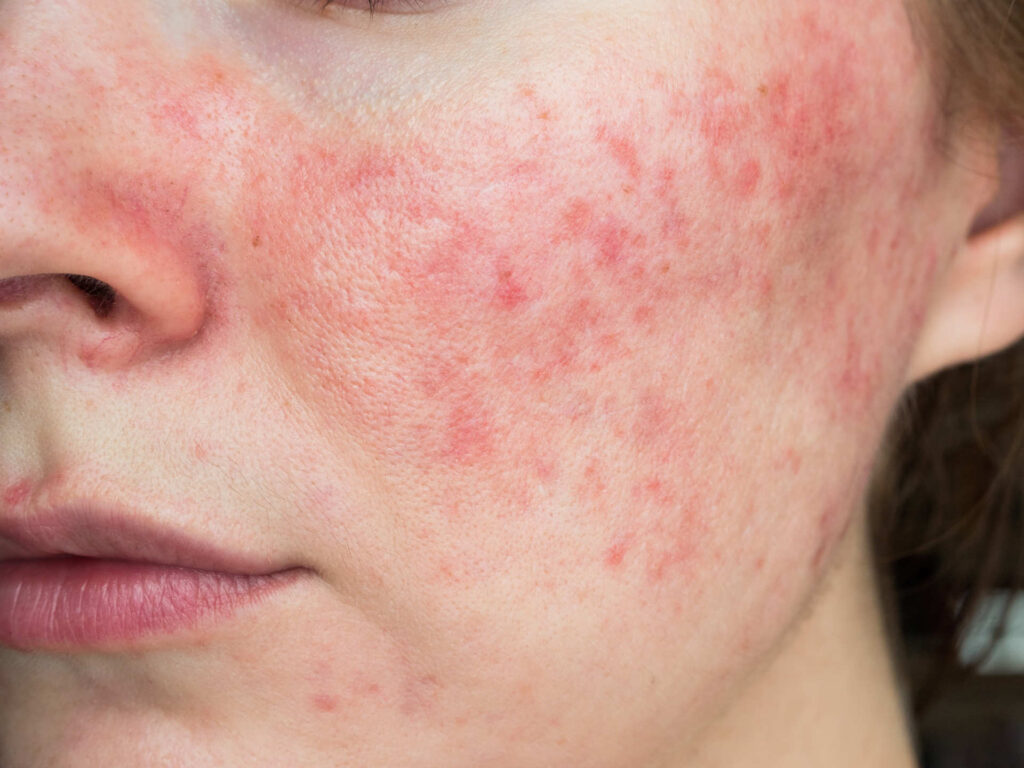
The National Rosacea Society estimates that over 16 million people in America and 415 million people worldwide suffer from Rosacea, a condition that results in irritation and redness. At California Dermatology Care, we serve patients in San Ramon, Hercules and Livermore, treating rosacea with a mixture of prescription therapy, skincare products, lifestyle changes and lasers depending on your skin type and symptoms. The first step is understanding why the redness occurs and how to take steps toward a calmer complexion.
What Is Rosacea?
Rosacea is a common but poorly understood condition that affects the blood vessels and immune response of facial skin. It is most common on the cheeks, nose, chin and forehead, and starts as occasional flushing before developing into a more constant problem. Some patients develop small bumps or pus-filled spots that look like acne. Others notice thickened skin or irritated eyes.
The cause is not fully understood, but is thought to be a mixture of factors including an overactive immune response, blood vessels that dilate too easily and an overgrowth of Demodex, a microscopic mite that lives in human pores. Rosacea is not caused by poor hygiene and cannot be cured, though it does respond well to treatment.
Common Rosacea Triggers
Triggers are not the causes of rosacea, but they can set off flare-ups by widening blood vessels and raising the temperature of the skin. Triggers are different for everyone, but may include:
Heat and Temperature Increases
Anything that raises the skin’s temperature can cause flushing. This includes hot showers, saunas, heated rooms and hard exercise. The redness from these dilated facial blood vessels often calms once you cool down, but repeated flushing can make visible vessels more permanent.
Hot Beverages, Alcohol and Spicy Foods
Some drinks warm up the body from the inside, like coffee and tea. Others widen blood vessels naturally, like alcohol. Red wine is one of the most common dietary triggers. Spicy foods contain capsaicin, which is a compound that raises body temperature and brings blood to the surface of the skin.
Sun Exposure
Individuals with rosacea often have to be more careful about spending time in the sunlight, since ultraviolet light is one of the strongest triggers of rosacea. Sun exposure inflames the skin and damages blood vessels, deepening facial redness.
Mask Wearing
Some people find that wearing a mask traps heat and humidity against the lower face and triggers their rosacea. The fabric also rubs against the skin and creates friction that irritates sensitive areas. Mask use for long stretches can cause noticeable redness and bumps, which can affect medical professionals and other individuals needing to wear a mask for long periods.
Working in Hot Environments
Some jobs expose the skin to constant heat. For example, kitchen staff work beside ovens and stoves for hours, and that radiant heat keeps facial vessels dilated. Outdoor workers face both sun and heat and can struggle more with irritating symptoms.
Signs Your Skin Barrier Is Stressed
The skin barrier is the outer layer that holds moisture in and keeps irritants out. In rosacea, this barrier is often weakened, which leaves skin reactive and prone to flares, with signs such as:
- Visible Redness: Persistent pink or red tones across the cheeks and nose are one sign that the barrier is struggling. While a brief blush is normal for everyone, this redness lingers and may come with a stinging or burning feeling.
- Skin That Feels Warm or Reactive: Some skin may feel hot to the touch or flush quickly, and this points to overactive blood vessels. A reactive face may turn red even after small shifts in temperature or a new product.
- Dryness or Irritation: A weakened barrier loses water faster, which leaves skin dry, tight and flaky. This dryness may come alongside redness, and rough or peeling patches make rosacea look more inflamed.
- Heightened Sensitivity to Products: When the barrier is compromised, products that once felt fine may sting, burn or trigger redness.
Rosacea Treatment Options
Topical and Oral Prescription Treatments
We choose the right topical and oral treatments based on whether there are papules and pustules or just redness. When there are small bumps, topical medication like metronidazole, azelaic acid or ivermectin can be effective at reducing inflammation and bacteria on the skin. For widespread or stubborn breakouts, your doctor may add a low-dose oral antibiotic. Redness and flushing without bumps can be treated with a topical agent that constricts blood vessels. Topical ivermectin can also control the overgrowth of demodex mites that can multiply and worsen inflammation. Some people with pets may find that they have more demodex mites, as they can be transferred from pets to people.
Laser Treatments for Rosacea
Lasers can be used to reach visible blood vessels that creams cannot. California Dermatology Care offers one of the largest menus of vascular lasers in the East Bay so we can match the device to your skin.
- Vbeam Pro/ Prima / Perfecta: Vbeam is a pulsed-dye laser and a gold standard for facial redness. It sends bursts of yellow light into dilated vessels, where blood absorbs the light, and the vessel collapses without harm to nearby skin. The Pro, Prima and Perfecta platforms treat broad redness and visible vessels with little downtime.
- Excel V: Excel V uses two wavelengths to reach both surface redness and deeper vessels. It treats a wide range of vascular concerns, from diffuse flushing to larger defined vessels. It suits patients whose redness has not fully cleared with a single-wavelength laser.
- Glacial RX: Glacial RX cools the skin to calm inflammation and fade redness. The controlled cooling reduces the look of broken capillaries and soothes irritation with no heat and little discomfort. It pairs well with other treatments for sensitive, reactive skin.
What to Expect During Treatment
Because rosacea has no cure, care focuses on long-term control, with a continual partnership between you and your doctor.
Consultation and Skin Assessment
Your first visit includes a full skin evaluation with a member of our clinical team. They will examine the pattern of your redness and irritation and review all of your symptoms, also discussing your medical history and anything that is relevant to your skin health.
Identifying Triggers and Rosacea Subtype
Rosacea has several subtypes, from redness and flushing to bumps and thickened skin. Each responds to different types of treatments, so your provider will need to work with you to find the right plan. They will map out your triggers and determine your subtype before suggesting the specific treatments.
Maintenance and Follow-Up
Follow-up visits are important with rosacea so we can track your progress and adjust your treatment or strategies as your skin changes. We can also help with periodic laser sessions to help calm your skin and skincare recommendations to keep your redness under control.
How to Support Calmer Skin at Home
Strengthen the Skin Barrier With Nourishing Hydration
When your skin’s barrier is strong, it can hold in more moisture and resist irritation. One of the best ways to help improve the barrier is hydrating moisturizers that replace lost water and rebuild the outer layer with nourishing ingredients. This will leave your skin less reactive to triggers. Some of the most helpful ingredients include ceramides, glycerin and hyaluronic acid.
Soothe Visible Redness With Calming Formulas
Some products calm inflammation and soothe red skin. Certain ingredients to look for in skin care are niacinamide, azelaic acid and green tea extract. Fragrance-free formulas are also a must for lowering the risk of further irritation.
Protect Daily With SPF
Daily sunscreen is one of the most protective steps you can take. Mineral sunscreens with zinc oxide or titanium dioxide are often less irritating for sensitive skin than chemical formulas. You should also look for products that have UVA/UVB protection and have an SPF of 30 or higher.
BrandMD Calming Essentials for Rosacea
California Dermatology Care carries the BrandMD line for sensitive, rosacea-prone skin.
- HydraLite Moisturizer: A lightweight moisturizer that hydrates without making the skin oily. It includes ingredients that improve enlarged pores and soothe the skin, including niacinamide, Vitamin B3, acai, green tea, aloe and willow bark.
- Physical Daily Defense: A mineral sunscreen that shields skin from ultraviolet light. The SPF 40 formula is water-resistant and includes ingredients that make your skin soft.
- HydraBalance: This serum combines many powerful ingredients, including niacinamide, green tea extract, zinc PCA and copper PCA to help promote a clear complexion.
- HA Physical Tint: This tinted mineral sunscreen pairs sun protection with light coverage. The tint helps neutralize redness while hyaluronic acid adds hydration.
- Azelaic Acid 10%: This soothing cream reduces redness, inflammation and bumps. Azelaic acid calms rosacea and evens skin tone, and it stays gentle enough for regular use on sensitive skin.
Why Choose Us?
California Dermatology Care is led by Dr. William Ting, a board-certified dermatologist and Fellow of the American Academy of Dermatology, the American Society for Dermatologic Surgery and the American Cutaneous Oncology Society. As medical director, he has built one of the most comprehensive laser practices in the East Bay, and patients travel from across the Bay Area and Northern California for his care. He is joined by Dr. Argentina Leon, along with experienced physician assistants and registered nurses. The practice treats rosacea across the full range of options, from prescription therapy to advanced vascular lasers, all under one roof.
Schedule Your Rosacea Consultation
If facial redness, irritation, flushing or bumps are affecting the comfort of your skin, we can help at California Dermatology Care. Schedule a consultation with Dr. William Ting at our San Ramon, Hercules or Livermore office to build a rosacea plan for your skin. Call 925-328-0255 or book online today.