








 Incredible Marketing
Mohs Micrographic Surgery
Understanding Mohs Micrographic Surgery
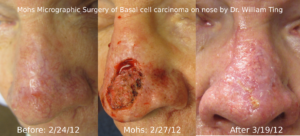
What is Mohs Surgery?
Mohs Surgery is a micrographically controlled procedure, providing the most precise method for removal of the cancerous tissue, while sparing the greatest amount of healthy tissue. For this reason, Mohs surgery may result in a significantly smaller surgical defect and less noticeable scarring, as compared to other methods of skin cancer treatment. Mohs surgery has been shown to be a highly effective treatment for certain types of skin cancer, with a cure rate of up to 99% for certain tumors.
What are the indications for Mohs Surgery?
The Mohs procedure is recommended for skin cancer removal in anatomic areas where maximum preservation of healthy tissue is desirable for cosmetic and functional purposes, such as the T zones of the face. It may also be indicated for lesions that have recurred following prior treatment, or for lesions with aggressive histology which may suggest greater likelihood of recurrence.


Dr. William Ting is board certified by American Board of Dermatology with subspecialty certification in Micrographic Dermatologic Surgery and has performed more than 4,000 Mohs Micrographic surgery since year 2000. His surgical skills were developed during Dermatology Residency at the University of Iowa under the tutelage of well-known academic Mohs surgeons Drs. Duane Whitaker, Christopher Arpey and Daniel Davis. Given his extensive surgical experience with Iowan farmers with skin cancers during Dermatology Residency and his desire to manage the entire spectrum of the field of dermatology, Dr. Ting decided not to pursue a fellowship under American College of Mohs Surgery. Dr Ting is a member of American Society for Mohs Surgery as are 48% of Mohs surgeons in California.
Dr. Ting is proud to be the first dermatologic surgeon in the San Francisco Bay Area to introduce Cutera GenesisPlus Laser for post Mohs surgery scar revision. Both hypertrophic surgical scar and associated redness can be effectively treated with Cutera GenesisPlus Laser.

Hypertrophic surgical scar and associated redness on nose after Mohs surgery treated with Cutera GenesisPlus

Hypertrophic surgical scar and associated redness on right upper lip after Mohs surgery treated with Cutera GenesisPlus
Patients Preparing for MOHS Surgery
We would like for you to be as comfortable as possible and prepared to be in the office for a few hours. Most cases can be completed in three or fewer stages, requiring less than four hours. However, it is not possible to predict how extensive a cancer will be in advance. We recommend that you reserve the entire day for this procedure. We recommend that you prepare in the following ways:
- Advise the doctor prior to the surgery if you are currently on any blood thinning medications. It is ideal to stop aspirin and all NSAIDS 2 weeks prior to procedure. We may need to contact your primary care physician.
- Do not take medications such as aspirin, ibuprofen, naproxen or supplements such as fish oil, vitamin E, ginkgo biloba for at least two days prior to the surgery.
- Wear casual, layered clothing for your comfort.
- Please eat normally on the day of the surgery. We suggest that you also brought a light snack or lunch.
If you have any additional questions, please contact the office at
(925) 328-0255 or email medical.assistant@CalDermCare.com
*Patient education matters to us. The information on this page has been reviewed by the board-certified dermatologists of California Dermatology Care. If you have any questions about our procedures or treatments, please get in touch with us today.
View Before & After Photos